
TeleRay vs Medicai for Mobile Access
Quoted in this article$2,000 to $18,000
Many physicians abandon a platform mid-shift after the mobile viewer fails to load studies from another location. The result is lost time trying to reach the radiologist or waiting for IT to fix a device problem.
By the end of this article you will know which tool loads studies in your browser without an app, which one supports multiple sites from one account, and which one gives you a clear pricing model for mobile access. You will finish ready to choose between TeleRay and Medicai.
Quick Verdict: TeleRay vs Medicai for Mobile Access
Medicai delivers fast mobile DICOM access while TeleRay offers a separate mobile platform. The choice depends on your latency tolerance and storage needs.
- Medicai maintains rapid study loading across networks, while general mobile platforms often face slower response times.
- Image access stays consistent during high demand periods, unlike typical platform variability.
- Study sharing completes quickly across 70 clinics and hospitals on the platform.
- TeleRay provides dedicated mobile features for teleradiology workflows.
At a glance: how Medicai compares to TeleRay, Medicai for Mobile Access on the features that matter most.
| Feature | Medicai | TeleRay | Medicai for Mobile Access |
|---|---|---|---|
| Mobile Access | ✓ | ✓ | — |
What Is Medicai?
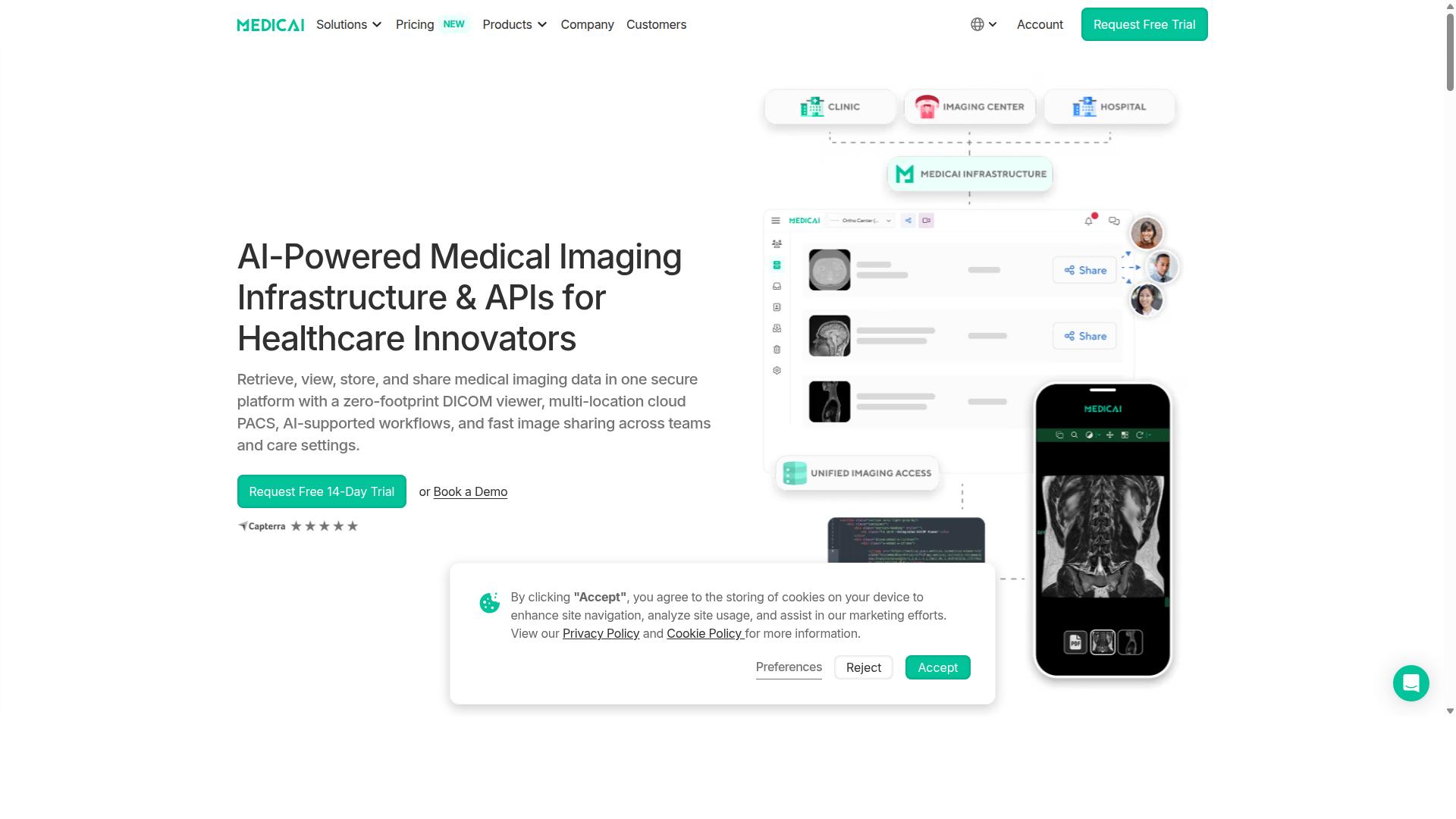
Medicai is a cloud-first medical-imaging platform that lets providers retrieve, view, store, and share DICOM studies without installing software. The platform runs entirely in browsers through a zero-footprint viewer that eliminates local downloads or plug-ins.
Its single secure environment handles retrieval, viewing, storage, and sharing in one place. Healthcare teams use this consolidated space for teleradiology and remote diagnosis across multiple locations.
Providers access studies from any device such as iOS, Android, or tablets. The system supports standard gestures including zoom, pan, and windowing for quick image review.
Cloud storage keeps patient data protected with encryption and audit logs. Image upload and study sharing happen directly within the same platform, which reduces the need for separate tools or email attachments.
Users authenticate with standard credentials and can collaborate in real time. The design supports cross-platform access without separate mobile apps or offline sync requirements.
What Is TeleRay?
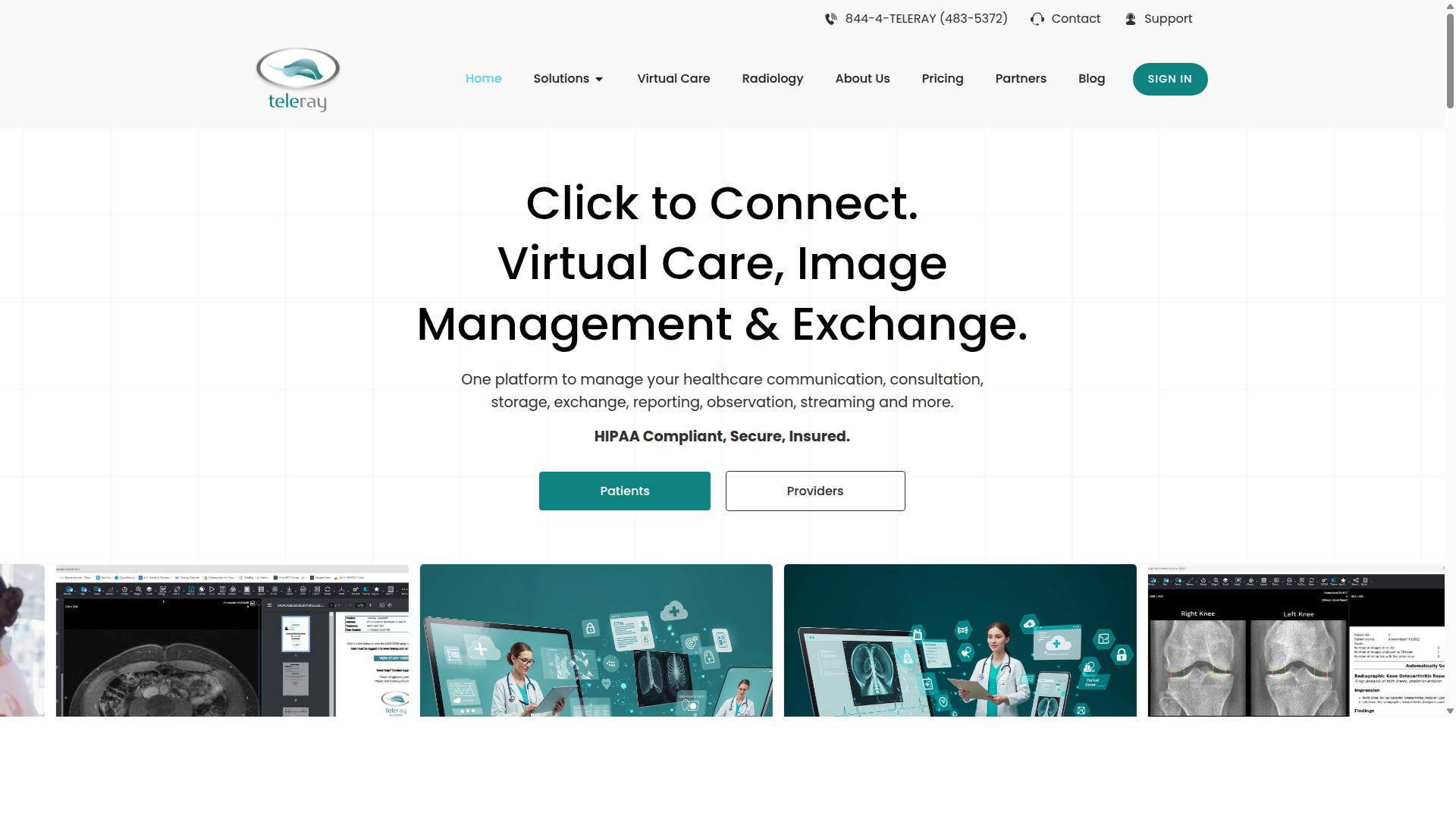
TeleRay is a teleradiology-focused mobile application that provides radiologists with remote viewing and reporting capabilities. The platform centers on mobile access so that physicians can review studies outside traditional radiology departments. This approach supports remote diagnosis when specialists need to read images from home or while traveling.
The app connects to existing PACS integration systems, allowing DICOM files to move between hospital networks and mobile devices. Users can open studies on tablets or phones without needing a desktop workstation. This connectivity makes it possible to maintain workflow continuity when staff are distributed across multiple locations.
Typical deployments focus on image upload and secure transmission of studies. Radiologists can view images on iOS and Android devices, though the experience depends on network conditions. Zoom, pan, and basic windowing functions are usually available for preliminary review.
Many organizations use solutions like TeleRay when they need a lightweight viewer for on-call coverage. The tool addresses situations where full workstation access is not practical. Latency and bandwidth can still affect performance during peak usage or in areas with limited connectivity.
What Is Medicai for Mobile Access?
Medicai's mobile experience centers on its browser-based, zero-footprint viewer that maintains full DICOM functionality on tablets and phones. Clinicians can review studies and access imaging tools directly through any modern browser without installing separate applications.
Cross-platform consistency remains essential for medical teams that switch between devices during their workday. The same interface appears on iOS tablets, Android phones, and desktop computers, so users do not need to relearn navigation or locate different menus.
Key capabilities stay available across all devices. Clinicians can use zoom, pan, windowing, and contrast adjustment in the same manner whether they open studies on a phone during rounds or on a tablet in the reading room.
Medicai's product suite includes the Mobile Imaging App alongside its DICOM Viewer and Doctor Imaging Portal. These components work together to support teleradiology workflows where remote diagnosis happens quickly and securely.
Integration with existing systems supports radiologist workflow across locations. The platform offers PACS integration and EMR integration capabilities that maintain patient data continuity without requiring additional setup steps for each mobile device.
Features Compared
Three feature areas separate the two solutions for mobile radiologists.
Each area addresses different aspects of mobile access, image viewing, and data management. The first area covers how studies display on mobile devices. The second area examines storage and site connectivity. The third area reviews AI tools and security requirements.
Zero-Footprint DICOM Viewer
Medicai runs its viewer entirely in the browser, while TeleRay relies on a native app.
The browser approach eliminates downloads and device setup. Radiologists open a link and begin reviewing studies on any device. This method supports iOS and Android tablets without separate installations.
Multi-touch gestures enable natural image navigation. Users can zoom, pan, and perform windowing through standard touch controls. Contrast adjustment happens through simple finger movements on the screen.
The zero-footprint design reduces IT complexity across hospital systems. Browser-based access means fewer compatibility issues between different operating systems. Radiologists can switch between devices during their workday without losing session data.
Cloud PACS & Multi-Location Access
Medicai's Cloud PACS supports unlimited user accounts and multiple connected sites.
The platform offers concrete storage tiers for different practice sizes. The Starter plan provides 500 GB of cloud storage. The Standard plan increases capacity to 2 TB for larger operations.
Multiple locations connect through a single dashboard interface. Enterprise customers can link several external locations for unified study management. This setup eliminates the need to switch between separate systems when accessing studies from different facilities.
Unlimited user accounts allow entire care teams to participate in case review. Each team member maintains individual access credentials while sharing the same study repository. The structure supports collaborative workflows across distributed radiology groups.
AI-Supported Workflows & Security
Both platforms claim HIPAA compliance, yet their AI integrations differ in scope.
Medicai maintains partnerships with MD.ai and Rayscape.ai for diagnostic assistance. These connections provide AI-powered diagnostics directly within the imaging workflow. The Radiology AI Co-Pilot feature supports radiologist decision-making during study interpretation.
TeleRay offers standard teleradiology encryption and audit features. Medicai extends security through HIPAA and GDPR compliance standards. The platform includes structured reporting tools that align with regulatory documentation requirements.
Patient data protection combines with AI workflow integration for complete mobile access. Radiologists can access AI assistance while maintaining audit trails for each study review. The combination supports both diagnostic accuracy and compliance documentation needs.
Pricing Compared
Medicai's pricing is transparent and tiered by storage; TeleRay's cost structure is not publicly itemized. This difference matters for teams evaluating mobile access solutions because predictable monthly fees help planning.
Starter plan costs $249 per month and provides 500 GB of cloud storage with unlimited user accounts. No connected locations are included at this level.
Standard plan costs $749 per month and includes 2 TB of cloud storage with unlimited user accounts plus one connected location. This tier supports teams that need greater storage capacity for mobile teleradiology workflows.
Yearly billing offers 15 percent savings on both plans, bringing Starter to $209 per month and Standard to $639 per month when paid annually. Enterprise customers receive custom pricing based on storage and location requirements.
A one-time DICOM Gateway setup fee of $1,000 applies per location for organizations that require PACS integration. A free 14-day trial lets users test Starter plan features without providing a credit card.
Per-study pricing remains available for enterprise customers who prefer usage-based billing instead of fixed monthly rates. Refunds are not available for partial periods under any plan.
Because TeleRay does not publish pricing details publicly, direct cost comparisons require direct contact with their sales team. This lack of transparency can slow decision-making for practices that want immediate budget clarity.
Who Should Choose Medicai
Hospitals and multi-site imaging groups that require scalable cloud storage and browser access will benefit most from Medicai. These organizations often manage complex imaging workflows across multiple facilities and need reliable mobile access for radiologists and specialists working from different locations.
Medicai offers unlimited user accounts and multi-location connectivity. This setup supports large hospitals that need to accommodate staff across departments without creating separate licensing structures.
Specialty centers in orthopedics, neurology, oncology, and cardiology can use the platform to coordinate care between physicians at different sites. The cloud-based approach allows studies to be accessed from any browser-enabled device.
Multi-location groups that handle teleradiology services or tumor board reviews often need shared access to imaging studies. Medicai supports this through its multi-site connectivity model.
Virtual care providers and telemedicine platforms also benefit from the unlimited account structure. These organizations can extend access to referring physicians and consultants without concern for user count restrictions.
Organizations that prioritize flexible mobile access across different specialties will find Medicai suited to their operational needs. The platform accommodates both clinical workflows and administrative requirements for secure image sharing.
Who Should Choose TeleRay
Smaller radiology groups that prioritize a dedicated mobile app may consider TeleRay. This platform positions itself as a mobile-first teleradiology solution built around native applications rather than browser-based viewers.
Practices that need consistent performance across different device types often evaluate native apps first. TeleRay offers this approach for teams focused on iOS and Android environments.
Organizations with limited IT resources may prefer solutions that reduce browser compatibility concerns. Native applications can sometimes handle device-specific features more directly than web viewers.
Research suggests some practices value dedicated mobile experiences for their radiologist workflow. Teams that rely heavily on tablets might find native apps align better with their daily routines.
Groups that perform frequent remote diagnosis tasks sometimes choose platforms with strong mobile foundations. TeleRay caters to this preference through its app-centric design.
Smaller facilities evaluating mobile access options should assess their specific device ecosystem. The choice between native apps and browser viewers depends on existing hardware investments and workflow patterns.
Who Should Choose Medicai for Mobile Access
Clinicians who need immediate DICOM access on any device without downloads will favor Medicai's mobile access.
The platform delivers a zero-footprint viewer that runs directly in standard browsers on phones and tablets. No installations or updates are required, which removes common barriers during rounds or off-site consultations.
Low-latency browser delivery keeps image loading times short across variable network conditions. Users can open studies quickly without waiting for large files to transfer, which suits specialties that rely on rapid review such as emergency medicine and teleradiology.
Specialists working across multiple locations benefit from the same interface on iOS and Android devices. The system supports core functions including zoom, pan, and windowing directly through multi-touch gestures.
Teams that already use Medicai's Cloud PACS and Medical Image Exchange find mobile access integrates naturally with existing workflows. Images stored in the cloud remain available on tablets or phones without additional configuration steps.
Researchers and care coordinators who manage tumor boards or structured reporting also gain from consistent access across device types. The same study can be reviewed on a workstation in the morning and a tablet during an afternoon meeting.
Final Verdict
Medicai stands out for organizations that want scalable cloud storage, browser access, and transparent pricing. Mobile access plays a decisive role in teleradiology workflows, where clinicians need reliable access to studies from any location.
The platform processes more than one million studies each year, a volume that reflects its proven capacity to handle high demand. Browser-based access eliminates the need for separate mobile applications while maintaining cross-platform consistency across devices.
HIPAA and GDPR compliance ensures patient data remains protected during transfer and storage. These security certifications support healthcare organizations operating across multiple jurisdictions without additional compliance overhead.
Global availability means providers in different regions can collaborate on the same studies. Secure study sharing becomes straightforward when all participants use the same compliant platform.
Medicai USA, located at 7901 4th St N, STE 300, St. Petersburg, FL, 33702, can be reached at +1 (832) 220 1035. Medicai Romania, at 53-55 N Filipescu, 5th Floor, Sector 2, Bucharest, 020961, offers support at +40 316 305 875.
Recommended Resources: